Knowing that you or someone you care about may need speech and language support is only the first step. It isn’t always clear what a Speech and Language Therapist actually does, whether private or independent therapy is an option, or how to find someone with the right experience. This guide explains what independent Speech and Language Therapy covers, how to search for a qualified therapist, and what to check before you get in touch.
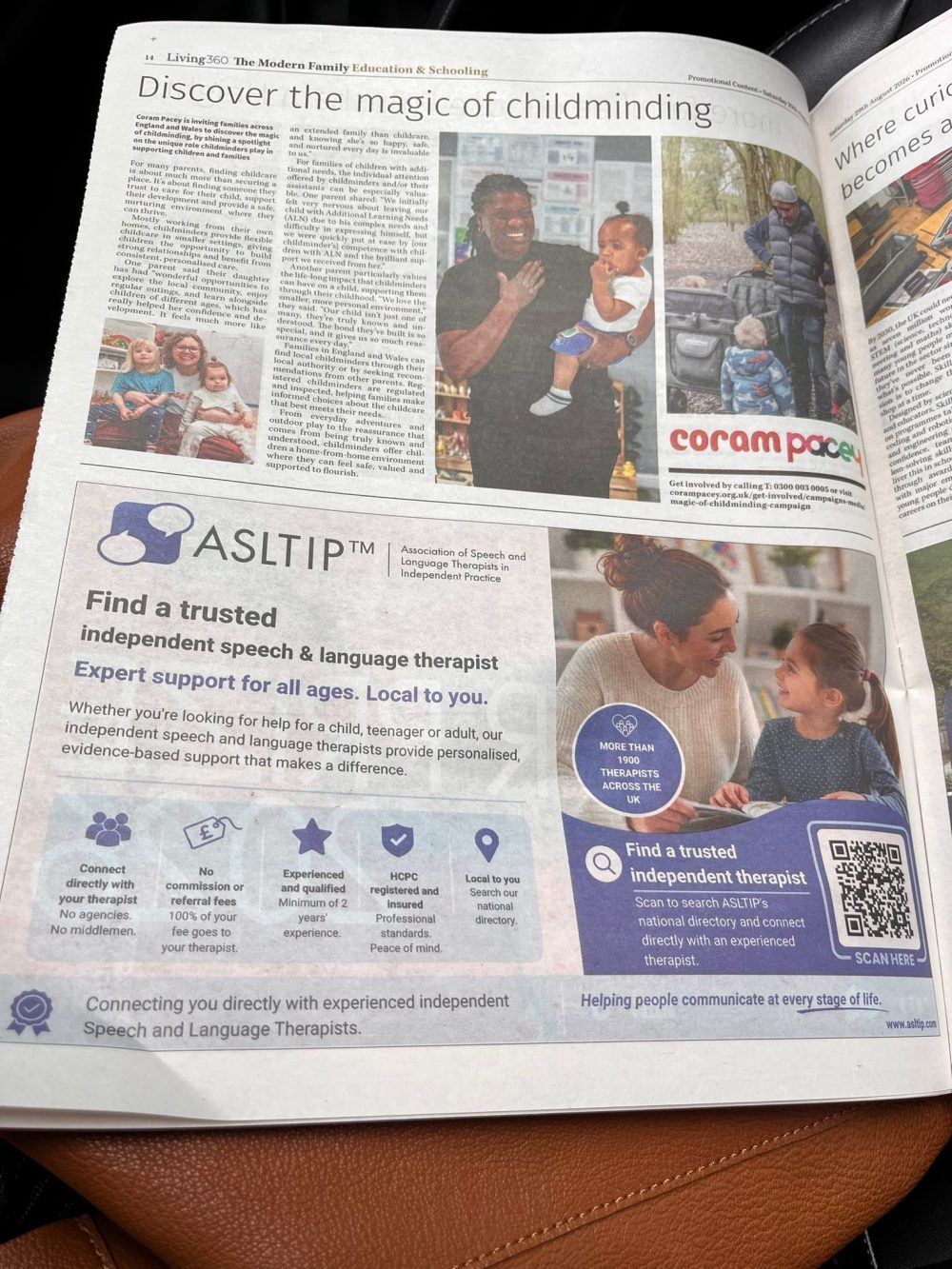
ASLTIP recently raised awareness of independent Speech and Language Therapy through a paid placement in The Guardian’s Families supplement, part of our wider Find a Therapist You Can Trust campaign. The aim was simple: help more people recognise that independent therapy is available, and give them a clear route to finding it.
What Do Speech and Language Therapists Help With?
Speech and Language Therapists work with children, young people and adults, supporting a broad range of communication and swallowing needs, including:
- Speech and language development
- Fluency (including stammering)
- Voice difficulties
- Developmental communication needs
- Eating, drinking and swallowing (dysphagia)
- Communication changes linked to neurological conditions (such as stroke, brain injury or progressive conditions)
Some therapists work across several of these areas, while others build highly specialist expertise in one. The right fit depends on the person’s age, their individual needs, the therapist’s experience, and the type of support required.
Private speech and language therapy can offer another route to assessment, advice or ongoing therapy — for yourself, a family member, or someone you support professionally. Schools, care settings and other professionals and commissioners also use independent therapists when they need specific experience or faster access than other pathways allow.
How to Find a Private Speech and Language Therapist
People searching for support often use the terms “independent Speech and Language Therapist” or “private Speech and Language Therapist” interchangeably, both refer to therapists working outside the NHS.
The ASLTIP Find a Therapist directory is built to make that search straightforward. It’s free to use, commission-free, and lets you filter by location, age group, and the type of support you need.
From there, you can view individual therapist profiles and contact them directly to discuss:
- Their relevant experience
- Whether appointments are in person or online
- Availability and fees
- What an initial assessment or course of therapy might involve
There isn’t always one obvious starting point, and that’s fine. A short conversation with a therapist can help you work out whether their service is the right match for your individual needs, or whether another professional or pathway would suit you better.
If you shortlist several therapists through our search function, you don’t need to write out the same enquiry again and again — our contact form lets you write your message once and send it to everyone on your shortlist at the same time, saving you the repetition.
Why Choose a Registered, ASLTIP-Listed Therapist
Qualifications, proper registration, and ongoing professional development matter when choosing who to trust with your care, or a family member’s. Every therapist listed with ASLTIP is a qualified Speech and Language Therapist, registered with the Health and Care Professions Council (HCPC) and a member of the Royal College of Speech and Language Therapists (RCSLT).
That registration and membership offer real reassurance about training and professional standards. But every person’s situation is different — reading a therapist’s profile and talking through their approach and experience is still the best way to judge whether they’re right for you.
Frequently Asked Questions
How do I find a private speech and language therapist? Use the ASLTIP Find a Therapist directory to search by location, age group and area of need, then contact therapists directly to discuss your requirements. If you shortlist more than one therapist, you don’t need to write out your message separately for each, our contact form lets you write your enquiry once and send it to all the therapists on your shortlist, saving you time.
What’s the difference between NHS and independent speech and language therapy? Independent (or private) therapy is arranged and funded outside the NHS, often offering more flexibility in timing, frequency and choice of specialist. Both NHS and independent therapists must meet the same HCPC registration standards.
Is private speech therapy available for adults as well as children? Yes. Independent Speech and Language Therapists support people of all ages, from young children with developmental communication needs to adults with voice, fluency, swallowing or neurological communication difficulties.
How do I know a private speech and language therapist is properly qualified? Check that they are registered with the Health and Care Professions Council (HCPC) and, ideally, a member of the Royal College of Speech and Language Therapists (RCSLT). All therapists listed on ASLTIP meet both criteria.
Start Your Search Today
Whether you’re looking for support for yourself, a child, a family member or someone you work with, the ASLTIP Find a Therapist directory is free to use, commission-free, straightforward way to explore your options and connect with an independent Speech and Language Therapist directly.